Skip to content
♥︎ GIVE LOVE. GIFT OUMO
🔥 UP TO 30% OFF SALES

Step-by-Step Wear Guide

How to Wear Your Piercing Jewelry

Choose your jewelry type to watch the video, browse quick answers or read the full guide.

For fully healed, settled piercings and known compatible jewelry. Use clean hands. Stop if there is resistance, pain or bleeding; ask a qualified piercer about healing piercings or an uncertain fit or closure.

01

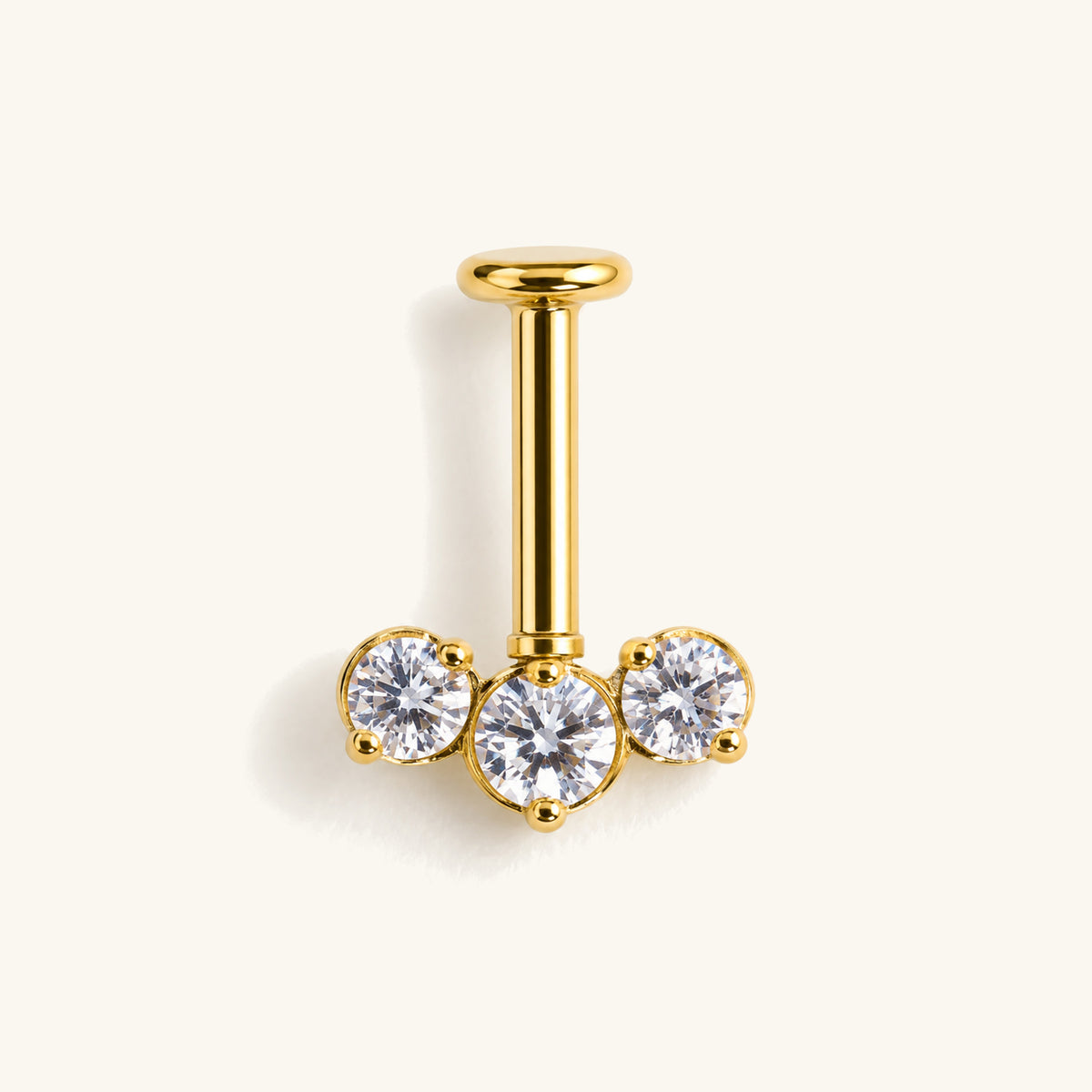
Internally Threaded

Copy section link

Questions & answers

Which way do I turn internally threaded jewelry?

Looking directly at the removable end, turn it counter-clockwise to loosen and clockwise to tighten. If a mirror or rear view makes the direction confusing, stop and reorient rather than twisting the whole post through the piercing.

Are both ends removable?

Sometimes, but not always. A barbell may have one fixed end, two removable ends or a brand-specific construction. Confirm the product design instead of forcing an end that may be fixed.

Why will the end not screw into another post?

Internal threading is a category, not one universal component standard. Thread diameter, pitch, post gauge and end seat can vary. Use only a combination confirmed compatible by the manufacturer, seller or piercer.

How tight should the end be?

It should be fully seated and secure with controlled finger pressure. Do not use household tools to over-tighten it. If it loosens repeatedly or a gap remains, have the thread and fit checked.

Can I change internally threaded jewelry while my piercing heals?

Not as a routine customer-led change. Healing jewelry may need professional adjustment or downsizing, but the APP advises having a qualified piercer perform changes during healing.
Read full guide
02

Threadless

Copy section link

Questions & answers

Is threadless jewelry screwed in?

No. A pin on the decorative end fits inside a hollow post, and an appropriate bend creates holding tension. If you see a screw-shaped stem, the jewelry is threaded rather than threadless.

Do I twist or pull a threadless top?

For a known straight threadless system, brace the post and pull the top away along the pin axis. Some manufacturers allow a slight twist during release, but do not rotate the post through the piercing or lever the top sideways.

Are all threadless tops compatible with all threadless posts?

No universal cross-brand compatibility should be assumed. A manufacturer may make its own ends compatible across part of its system, but that does not establish the pin size, seat or tension required by another brand.

Should I bend the pin more if the top is loose?

Do not guess. Bend amount and direction depend on the exact product and post shape. Stop wearing a top that can detach and ask the manufacturer, seller or a qualified piercer to check and adjust it off the body.

Can I change only the decorative end and leave the post in place?

Some compatible threadless systems allow that in a fully healed, settled piercing. It still requires stable access, correct compatibility and a post that already fits. Changes during healing belong with a piercer.

Read full guide
03

Clicker Rings

Copy section link

Questions & answers

How do I find the opening on a clicker ring?

Look for two joints. One contains the hinge and acts as the pivot; the other is the catch seam where the moving segment releases. Use the product image or inspect the ring off the body if the distinction is not visible.

Should every clicker make a loud click?

No. The sound and feel vary by design. Confirm that the segment is fully aligned and seated and that the seam is flush; do not rely on sound alone.

Can I twist a clicker sideways like a seamless ring?

No. A clicker is designed to pivot at its hinge. Twisting the entire ring sideways can misalign the segment or damage the hinge and catch. A seamless ring uses a different opening method.

Why does my clicker close off the body but feel tight when worn?

The closure may be functional while the diameter, shape or placement fit is unsuitable. Do not squeeze it shut against tissue. Ask a piercer to assess the complete fit.

Can I use a clicker in a new piercing?

That decision depends on the placement, anatomy, swelling allowance, ring dimensions, movement, material, finish and exact design. It is an initial-jewelry decision for the piercer performing or assessing the piercing, not an instruction from this closure guide.

Read full guide
04

Seamless Rings

Copy section link

Questions & answers

Is a seamless ring the same as a clicker?

No. A seamless ring opens by flexing the ring itself at a split. A clicker has a hinged moving section and a latch. Look for the mechanism before applying pressure; do not twist a clicker's hinge as though it were a seamless seam.

Why should I twist the ring sideways instead of pulling it apart?

The sideways motion opens the ends out of plane like a small spiral while helping preserve the circle. Pulling the gap wider in the flat plane can change the ring's shape and make the ends difficult to realign.

Can I change a seamless ring while the piercing is healing?

Do not perform a customer-led change in a healing piercing. Initial style, diameter and change timing depend on anatomy, placement and tissue condition. A qualified piercer should assess and handle any necessary healing-stage change.

Can I use ordinary pliers if the ring is stiff?

This guide does not recommend household pliers. Some gauges and diameters need professional ring tools, and unprotected or poorly controlled tools can slip, scratch or distort jewelry. Take the piece to a piercer.

What if the piercing starts closing before the ring goes in?

Do not force the ring, probe the channel or repierce it yourself. Even healed channels can shrink quickly. A piercer can assess whether the channel remains open and whether assisted reinsertion is appropriate.

Read full guide
05

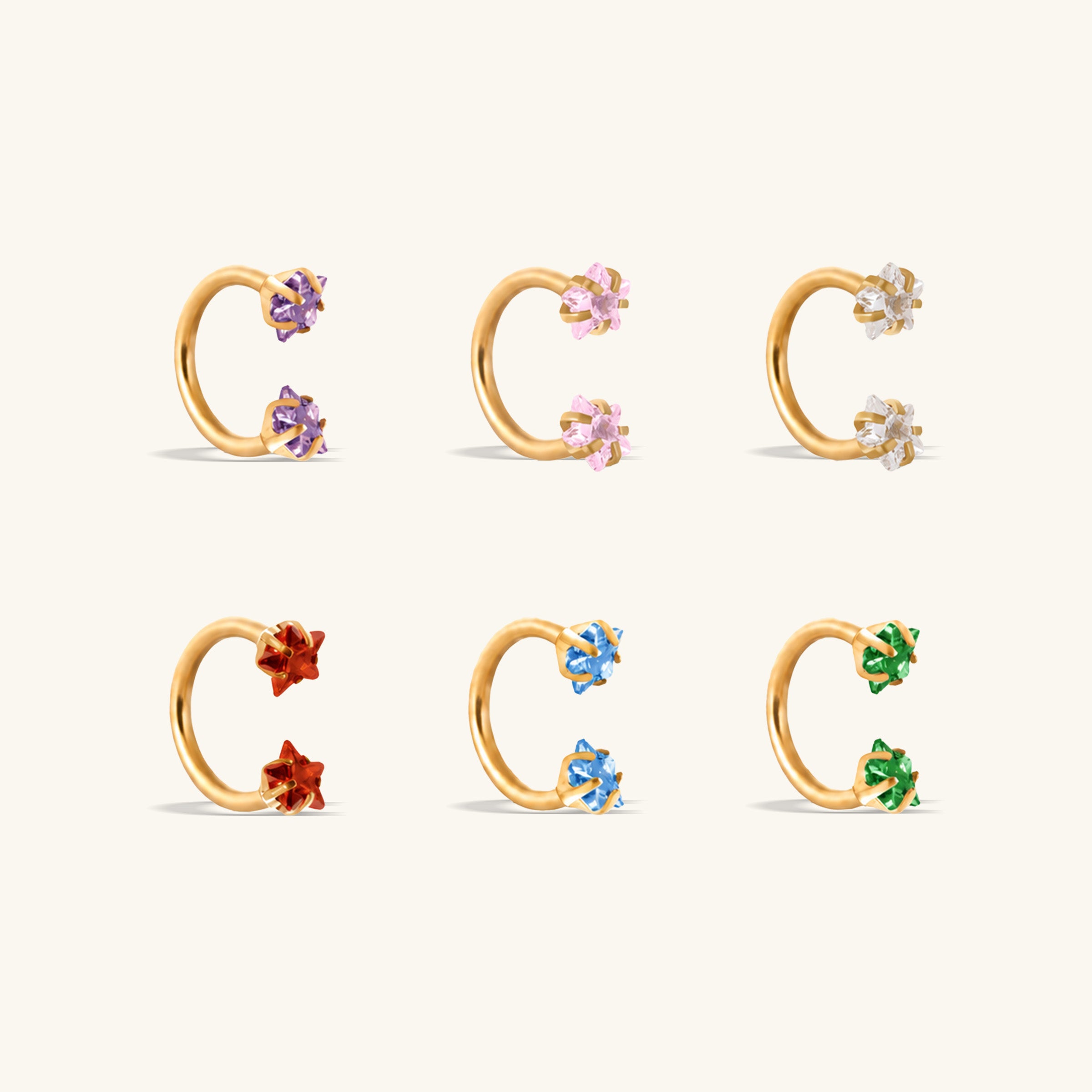
Horseshoe Rings

Copy section link

Questions & answers

Is a horseshoe ring the same as a circular barbell?

Usually, yes: horseshoe describes the open circular-barbell silhouette. Confirm the actual end and closure construction, because the common name does not say whether an end is threaded, threadless, fixed or compatible with another component.

Do both balls unscrew?

Sometimes both are removable, sometimes only one moves, and threadless models may pull apart rather than unscrew. Do not apply more torque to prove that an end is fixed. Check the product specification or ask a piercer.

Which direction loosens a threaded ball?

For a conventional right-hand thread, turn the removable end counterclockwise while looking directly at that end. Perspective changes what the hand motion looks like from the other side. Stop if the end does not respond to gentle, controlled pressure.

Can I use any replacement ball with the same gauge?

No. Gauge alone does not establish thread diameter, pitch, pin size, counterbore, material or manufacturer compatibility. Use a component documented for the specific post or have a piercer verify the combination.

Can I put a horseshoe ring in a healing piercing myself?

No customer-led healing-stage change is provided here. Placement, shape, diameter, end size and healing condition require professional assessment. If a change is necessary, let a qualified piercer perform it.

How tight should a threaded end be?

It should seat fully and remain stable under normal wear using controlled hand tightening. It should not be forced, cross-threaded or tightened with excessive tool torque. Repeated loosening or a visible gap needs inspection.

Read full guide
06

Curved Barbells

Copy section link

Questions & answers

Is a curved barbell the same as a horseshoe ring?

No. A curved barbell has a shallow arc; a horseshoe or circular barbell forms most of an open circle. Their dimensions, movement and suitable placements can differ even when both have removable ends.

Do both ends of a curved barbell come off?

Not always. One or both may be removable, or a threadless pin may pull out instead of unscrewing. Decorative lower ends are sometimes fixed. Check the exact product or ask a piercer before applying torque.

Will the same listed length fit across different curved barbells?

Not necessarily. Confirm how each manufacturer defines and diagrams its dimensions, then compare like for like. Bend, anatomy, angle and end design still affect fit even when the listed length matches.

Can I turn a curved barbell around?

Do not reverse an asymmetric piece without confirming the intended orientation. A different direction can change pressure, clearance and how a gem or dangle rests. Ask the fitting piercer when the design is placement-specific.

Can I change a curved barbell while the piercing is healing?

No customer-led healing-stage change is provided. Initial jewelry and necessary downsizing or replacement should be selected and performed by a qualified professional piercer.

Why will a replacement end not fit the bar?

The thread, pin, post gauge, counterbore or manufacturer system may differ, or one component may be damaged. Similar appearance and gauge do not prove compatibility. Do not force the parts together.

Read full guide